
The Mitsubishi Triton Climb
Mitsubishi Triton climbs the soft sand dune with ease whereas the heavy Land Cruiser struggles after many failed attempts.
Mitsubishi has recently announced some excitong plans for 2016 which include hints at its future direction when it showcased the new Outlander plug-in hybrid (PHEV) and the coupé-styled eX-Concept crossover at the Tokyo Motor Show.
Here’s everything you need to know:
http://mitsubishisa.co.za/mitsubishi-announces-model-plans-for-2016-and-future/
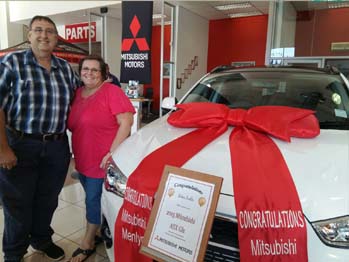
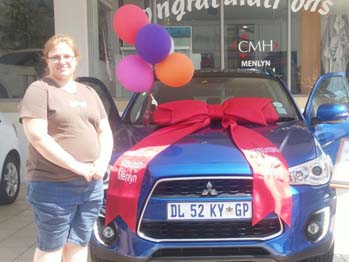


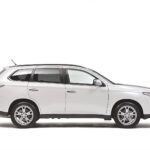
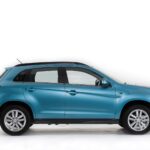
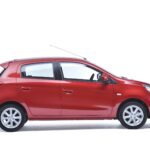
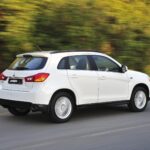
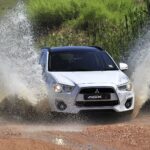
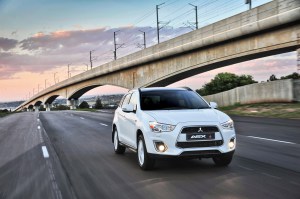 The Mitsubishi Motors ASX (Active Sporty Crossover) has been one of the company’s strongest sellers since its local launch in South Africa in 2011 – by offering a quality product, at excellent value-for-money prices. With a facelift in October 2013 this trend is set for the mid-size SUV to continue being a popular choice among buyers well into the future.
“This market is offering increasing levels of value for money and a continuous stream of new models. With this in mind we are full of confidence in our latest ASX offering, particularly as it has even more value-added features and benefits over its predecessor,” commented the CEO of Mitsubishi Motors SA, Jaco Oosthuizen.
The ASX, which was introduced to the SA market in September 2011 has already sold more than 3 500 units locally, with global sales in more than 100 countries already exceeding 380 000 units. The compact SUV was co-developed with several European brands (Citroen and Peugeot) and offers excellent refinement and quality levels. However, the Mitsubishi version of the model is globally the most successful due to the Japanese attention to detail and keen pricing. The Mitsubishi line-up, once dominated by big vehicles built to conquer Dakar, has done very well with the city styling and comfort of the compact ASX.
There are five models in the 2014 model year Mitsubishi ASX range in SA, all front-wheel drive and powered by a two-litre petrol engine, with a choice of five-speed manual or six-step continuously variable transmission (CVT). The well-proven and economical power unit develops 110KW of power at 6 000r/min and 197N.m of torque at 4 200r/min, sipping just 7.5l /100km – a big bonus with the current fuel prices.
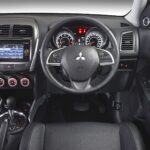
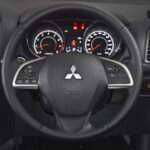
Inside all models now have a dark titanium colour centre panel, an upgraded audio system with four speakers and two tweeters on the GL and GLX models as standard. For the audiophiles there is the option of the Rockford Fosgate system on GLS derivatives, which incorporates a 500W subwoofer plus nine speakers. Conveniently controlled through the steering wheel mounted controls.
These quality add-ons are in addition to the wide range of other features that have been carried over from the previous models, including hands free Bluetooth connection to a mobile phone. The Link system is available across the board. Link, is voice controlled, allowing dialling features through software which also has a learning component. The phone is also controllable from the steering wheel. Park distance warning, fog lamps, multi-information display, rear luggage cover over the spacious luggage compartment and leather covered steering wheel and gear knob are also standard across the range. All models now have heated exterior rear view mirrors, cruise control which is controllable from the steering wheel, rain-sensing windscreen wipers and automatic lighting control according to the ambient light.
As one has come to expect from a Mitsubishi product, the safety levels are very high and the ASX achieved a 5-star rating in the Euro NCAP evaluation. Standard safety features include seven airbags, Mitsubishi’s DAKAR developed Reinforced Impact Safety Evolution (RISE) safety cell, ABS brakes with electronic brake distribution (EBD) and brake assist (BAS), with ISOFIX fittings for child seats.
With all these safety features and overall value for money offering, it’s not hard to see why the Mitsubishi ASX is a leader in its class.
The Mitsubishi Motors ASX (Active Sporty Crossover) has been one of the company’s strongest sellers since its local launch in South Africa in 2011 – by offering a quality product, at excellent value-for-money prices. With a facelift in October 2013 this trend is set for the mid-size SUV to continue being a popular choice among buyers well into the future.
“This market is offering increasing levels of value for money and a continuous stream of new models. With this in mind we are full of confidence in our latest ASX offering, particularly as it has even more value-added features and benefits over its predecessor,” commented the CEO of Mitsubishi Motors SA, Jaco Oosthuizen.
The ASX, which was introduced to the SA market in September 2011 has already sold more than 3 500 units locally, with global sales in more than 100 countries already exceeding 380 000 units. The compact SUV was co-developed with several European brands (Citroen and Peugeot) and offers excellent refinement and quality levels. However, the Mitsubishi version of the model is globally the most successful due to the Japanese attention to detail and keen pricing. The Mitsubishi line-up, once dominated by big vehicles built to conquer Dakar, has done very well with the city styling and comfort of the compact ASX.
There are five models in the 2014 model year Mitsubishi ASX range in SA, all front-wheel drive and powered by a two-litre petrol engine, with a choice of five-speed manual or six-step continuously variable transmission (CVT). The well-proven and economical power unit develops 110KW of power at 6 000r/min and 197N.m of torque at 4 200r/min, sipping just 7.5l /100km – a big bonus with the current fuel prices.
Inside all models now have a dark titanium colour centre panel, an upgraded audio system with four speakers and two tweeters on the GL and GLX models as standard. For the audiophiles there is the option of the Rockford Fosgate system on GLS derivatives, which incorporates a 500W subwoofer plus nine speakers. Conveniently controlled through the steering wheel mounted controls.
These quality add-ons are in addition to the wide range of other features that have been carried over from the previous models, including hands free Bluetooth connection to a mobile phone. The Link system is available across the board. Link, is voice controlled, allowing dialling features through software which also has a learning component. The phone is also controllable from the steering wheel. Park distance warning, fog lamps, multi-information display, rear luggage cover over the spacious luggage compartment and leather covered steering wheel and gear knob are also standard across the range. All models now have heated exterior rear view mirrors, cruise control which is controllable from the steering wheel, rain-sensing windscreen wipers and automatic lighting control according to the ambient light.
As one has come to expect from a Mitsubishi product, the safety levels are very high and the ASX achieved a 5-star rating in the Euro NCAP evaluation. Standard safety features include seven airbags, Mitsubishi’s DAKAR developed Reinforced Impact Safety Evolution (RISE) safety cell, ABS brakes with electronic brake distribution (EBD) and brake assist (BAS), with ISOFIX fittings for child seats.
With all these safety features and overall value for money offering, it’s not hard to see why the Mitsubishi ASX is a leader in its class.
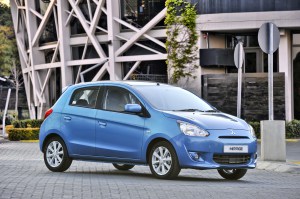 Mitsubishi Motors, the brand synonymous with the outdoors, 4×4 and of course Paris/Dakar has taken the wraps off its latest offering into the South African market. It’s neither 4×4 nor capable of entering the Paris/Dakar, but is rather small, stylish whilst still offering generous specification and fuel consumption.
Says Wynand Pretorius, Chief Operations Officer at Mitsubishi Motors South Africa: “The Mitsubishi Brand is on a continuing Renaissance in South Africa, and with the all-new Mirage we are opening our brand to a new buying audience who place affordability, quality and specification at the top of the buying decision. And, when everything else seems more expensive, to launch a superb value car like the Mirage, with its big heart, makes perfect sense for the South African market.”
The biggest news though is that Mitsubishi is launching the Mirage at a super-competitive R1899 per month finance option which includes 12-months comprehensive insurance. This should make the mini Mitsubishi a very attractive proposition to students and other first time buyers who might otherwise battle to get a decent insurance rate.
Three brand-new Mirage derivatives make up the new range in South Africa, each of which has been designed to offer different levels of specification with no compromise on powertrain, safety or efficiency. Powered by Mitsubishi’s surprisingly sprightly 1.2-litre, 3-cylinder DOHC petrol engine. making 57 kW and 100 Nm of torque peak at 4 000 rpm. Average fuel economy is said to be 4.9-litres per 100 km, with CO2 emissions of 115 g/km.
Standard features across the range include dual airbags, air conditioning, electric windows, a radio/CD audio system and steering wheel audio controls.
Those wanting a little more luxury can spec the optional R15 000 accessory package which can be fitted to any Mirage derivative and includes a cargo organiser, a centre arm rest console, front lower bumper garnish, rear parking sensors, satellite navigation and premium carpets.
The new Mitsubishi Mirage range is fronted by the new 1.2 MIVEC GL, which includes standard equipment like keyless entry, a radio/CD audio system, colour-coded bumpers, a third rear brake light, electric power steering with a tilt-adjustable steering wheel, a multi-information display, front electric windows and manual air conditioning with a pollen filter. Fourteen-inch steel wheels are available as well as a full-size spare.
The Mirage 1.2 MIVEC GLX represents the mid-range model, adding a number of features to GL specification. These include a fuel efficiency indicator in the instrument panel, 15-inch alloy wheels with a full-size alloy spare, colour coded mirrors and door handles, electric side mirrors, a cheeky rear spoiler with integrated third brake light, a leather-bound multi-function steering wheel, an accessory socket and a USB port added to the audio system.
Topping the new Mirage range is the 1.2 MIVEC GLS, which features keyless starting to complement the keyless entry, rear electric windows, auto up/down for the driver’s window with an anti-pinch function, fully automatic climate control and front fog lights.
Mitsubishi Motors, the brand synonymous with the outdoors, 4×4 and of course Paris/Dakar has taken the wraps off its latest offering into the South African market. It’s neither 4×4 nor capable of entering the Paris/Dakar, but is rather small, stylish whilst still offering generous specification and fuel consumption.
Says Wynand Pretorius, Chief Operations Officer at Mitsubishi Motors South Africa: “The Mitsubishi Brand is on a continuing Renaissance in South Africa, and with the all-new Mirage we are opening our brand to a new buying audience who place affordability, quality and specification at the top of the buying decision. And, when everything else seems more expensive, to launch a superb value car like the Mirage, with its big heart, makes perfect sense for the South African market.”
The biggest news though is that Mitsubishi is launching the Mirage at a super-competitive R1899 per month finance option which includes 12-months comprehensive insurance. This should make the mini Mitsubishi a very attractive proposition to students and other first time buyers who might otherwise battle to get a decent insurance rate.
Three brand-new Mirage derivatives make up the new range in South Africa, each of which has been designed to offer different levels of specification with no compromise on powertrain, safety or efficiency. Powered by Mitsubishi’s surprisingly sprightly 1.2-litre, 3-cylinder DOHC petrol engine. making 57 kW and 100 Nm of torque peak at 4 000 rpm. Average fuel economy is said to be 4.9-litres per 100 km, with CO2 emissions of 115 g/km.
Standard features across the range include dual airbags, air conditioning, electric windows, a radio/CD audio system and steering wheel audio controls.
Those wanting a little more luxury can spec the optional R15 000 accessory package which can be fitted to any Mirage derivative and includes a cargo organiser, a centre arm rest console, front lower bumper garnish, rear parking sensors, satellite navigation and premium carpets.
The new Mitsubishi Mirage range is fronted by the new 1.2 MIVEC GL, which includes standard equipment like keyless entry, a radio/CD audio system, colour-coded bumpers, a third rear brake light, electric power steering with a tilt-adjustable steering wheel, a multi-information display, front electric windows and manual air conditioning with a pollen filter. Fourteen-inch steel wheels are available as well as a full-size spare.
The Mirage 1.2 MIVEC GLX represents the mid-range model, adding a number of features to GL specification. These include a fuel efficiency indicator in the instrument panel, 15-inch alloy wheels with a full-size alloy spare, colour coded mirrors and door handles, electric side mirrors, a cheeky rear spoiler with integrated third brake light, a leather-bound multi-function steering wheel, an accessory socket and a USB port added to the audio system.
Topping the new Mirage range is the 1.2 MIVEC GLS, which features keyless starting to complement the keyless entry, rear electric windows, auto up/down for the driver’s window with an anti-pinch function, fully automatic climate control and front fog lights.


